
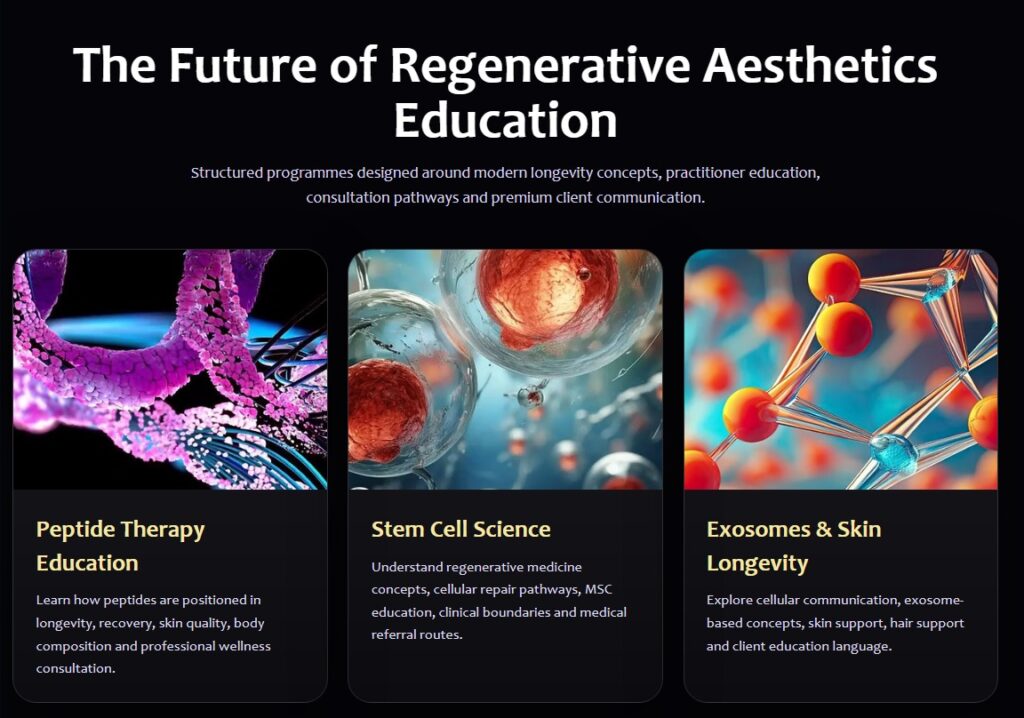
Medicine is entering one of its most exciting periods of innovation.
Across the UK and internationally, healthcare professionals are seeing increasing patient interest in weight management, longevity medicine, metabolic health, regenerative aesthetics, healthy ageing and preventative healthcare. Alongside this growing demand, clinicians are seeking reliable information about peptides, GLP-1 medicines, exosomes and stem cell science.
Understanding these rapidly evolving areas has become increasingly important for doctors who want to remain informed, answer patient questions with confidence and stay up to date with emerging scientific developments.
Whether you work in general practice, aesthetic medicine, endocrinology, sports medicine or preventative healthcare, regenerative medicine is becoming an increasingly relevant topic in modern clinical practice.
Why Are Peptides Becoming One of the Most Discussed Topics in Medicine?
Peptides are naturally occurring chains of amino acids that play an essential role in many biological processes throughout the body.
Researchers continue to investigate peptide science across a wide range of areas including:
- Metabolic health
- Weight management
- Healthy ageing
- Body composition
- Muscle preservation
- Recovery
- Tissue repair
- Skin health
- Cellular signalling
- Longevity medicine
Over the last few years, interest in peptides has expanded significantly as both clinicians and researchers continue to explore their biological functions and future potential.
For healthcare professionals, understanding peptide science provides valuable knowledge when discussing emerging research with patients.
GLP-1 Medicines Have Changed the Conversation Around Weight Management
One of the biggest developments in recent years has been the rapid adoption of GLP-1 receptor agonists for weight management and metabolic health.
These medicines have transformed conversations around:
- Obesity management
- Body weight
- Appetite regulation
- Metabolic disease
- Insulin sensitivity
- Cardiometabolic health
As public awareness continues to grow, doctors are increasingly being asked about newer peptide technologies, ongoing research and the wider field of peptide science.
Understanding the science behind these developments enables clinicians to have balanced, evidence-aware conversations while staying informed about this rapidly evolving area of medicine.
Metabolic Health Is Becoming Central to Preventative Medicine
Modern healthcare is moving beyond treating disease towards optimising long-term health.
Today’s patients are becoming increasingly interested in:
- Healthy ageing
- Weight management
- Energy levels
- Metabolic optimisation
- Preventative healthcare
- Lifestyle medicine
- Longevity strategies
As a result, metabolic health has become one of the fastest-growing areas of clinical interest.
Doctors who understand emerging scientific developments are well positioned to answer patient questions and discuss current evidence responsibly.
Exosomes and the Future of Regenerative Medicine
Exosomes have become one of the most exciting areas of regenerative medicine research.
These naturally occurring extracellular vesicles are involved in cellular communication, helping cells exchange biological signals that influence tissue function.
Researchers continue to investigate exosomes across areas including:
- Skin regeneration
- Hair research
- Wound healing
- Tissue repair
- Cellular communication
- Inflammatory pathways
- Regenerative aesthetics
Although research continues to evolve, exosomes remain one of the most talked-about subjects in regenerative medicine and aesthetic medicine.
For clinicians, understanding the underlying science provides valuable context when discussing current research and future developments.
Stem Cell Science and Cellular Regeneration
Stem cell science has transformed our understanding of tissue regeneration and cellular biology.
Current research continues to explore:
- Cellular regeneration
- Tissue repair
- Regenerative medicine
- Precision medicine
- Healthy ageing
- Future therapeutic approaches
Understanding stem cell biology also helps clinicians appreciate the broader principles of regenerative science, including safety, ethics, regulatory frameworks and appropriate referral pathways.
Why Longevity Medicine Is Growing So Quickly
Longevity medicine has evolved into one of the fastest-growing areas of healthcare.
Rather than focusing solely on treating illness, longevity medicine explores strategies that may help people maintain health, function and quality of life as they age.
Current areas of scientific interest include:
- Metabolic health
- Preventative medicine
- Healthy ageing
- Nutrition
- Exercise physiology
- Hormonal health
- Peptide science
- Regenerative medicine
- Precision medicine
As longevity medicine continues to develop, doctors are increasingly looking to expand their understanding of these emerging fields.
Why Continuous Medical Education Matters
Scientific innovation moves quickly.
Patients often encounter new treatments, technologies and concepts online long before they discuss them with their healthcare professional.
Staying informed enables clinicians to:
- Understand emerging research
- Interpret scientific literature
- Discuss evolving evidence responsibly
- Communicate clearly with patients
- Make informed clinical decisions within their professional scope
Education remains one of the most valuable tools for navigating rapidly advancing areas such as peptide science, regenerative medicine and longevity medicine.
The Future of Regenerative Medicine
The fields of peptides, exosomes, stem cell science and longevity medicine continue to evolve rapidly.
While many areas remain the subject of ongoing research, healthcare professionals who build a strong understanding of the science today will be better prepared for tomorrow’s clinical developments.
Whether your interest lies in metabolic health, regenerative aesthetics, preventative medicine or healthy ageing, understanding emerging scientific concepts is becoming increasingly valuable.
Discover More
If you’re a healthcare professional interested in learning more about:
- Peptide science
- GLP-1 research and metabolic health
- Exosomes
- Stem cell science
- Regenerative medicine
- Longevity medicine
- Healthy ageing
- Medical aesthetics
Book your consultation today to discover more about the latest developments in peptide science, regenerative medicine and longevity-focused medical innovation.
Frequently Asked Questions
What are peptides?
Peptides are short chains of amino acids that act as signalling molecules in many biological processes. Researchers continue to investigate their role in metabolism, tissue repair, healthy ageing and other areas of medicine.
Why are GLP-1 medicines receiving so much attention?
GLP-1 receptor agonists have transformed the management of obesity and metabolic disease, leading to increased interest in peptide science, metabolic health and the next generation of peptide research.
What are exosomes?
Exosomes are naturally occurring extracellular vesicles involved in cellular communication and are being actively studied within regenerative medicine and regenerative aesthetics.
What is longevity medicine?
Longevity medicine focuses on maintaining health, supporting healthy ageing and reducing disease risk through evidence-informed medical strategies.
Why is regenerative medicine growing so quickly?
Advances in biotechnology, cellular biology and medical research continue to expand scientific understanding of regenerative medicine, making it one of the fastest-growing areas of modern healthcare.


